
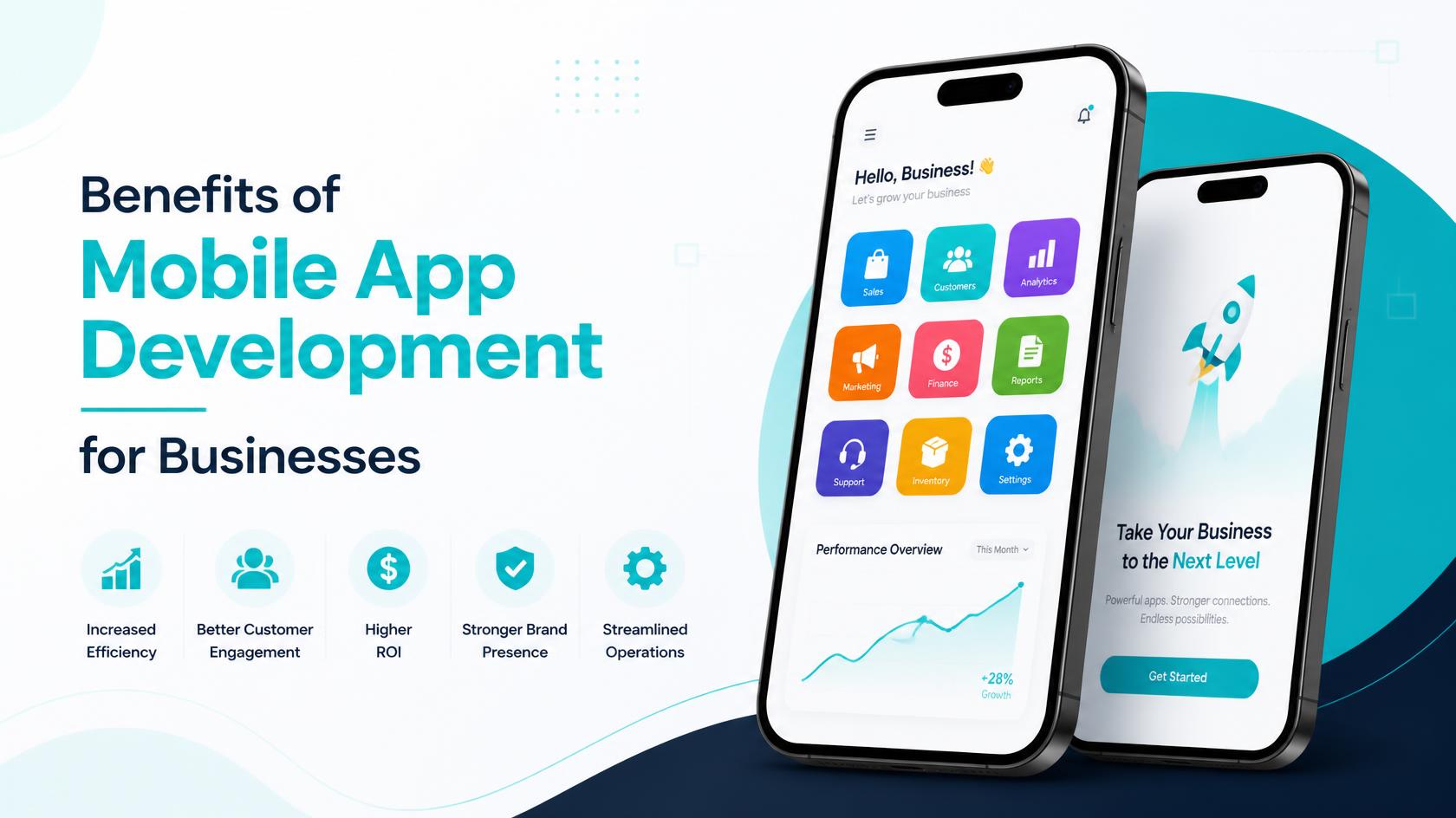
Mobile applications are no longer limited to large technology companies.
Businesses of different sizes are using mobile apps to improve customer service, increase engagement, streamline operations, and create more convenient digital experiences.
A mobile application can give customers direct access to your products or services from their smartphones.
Why Businesses Invest in Mobile Applications
Customers regularly use mobile devices to shop, book services, communicate, manage accounts, and make payments.
A business mobile app creates a direct connection between your company and its customers.
Unlike a standard website visit, an installed application keeps your brand accessible from the customer’s device.
Key Benefits of Mobile App Development
1. Improves Customer Convenience
A mobile app makes it easier for customers to access your services.
Depending on your business, customers may be able to:
- Book appointments
- Purchase products
- Track orders
- Manage subscriptions
- Contact customer support
- Access documents
- Receive updates
- Make secure payments
Reducing unnecessary steps can improve customer satisfaction and increase conversions.
2. Increases Customer Engagement
Mobile applications provide businesses with additional ways to communicate with customers.
Push notifications can be used to send appointment reminders, order updates, service announcements, personalised offers, and account notifications.
These messages should be relevant and used carefully to avoid overwhelming users.
3. Strengthens Customer Loyalty
A mobile application can support loyalty programmes, reward points, exclusive offers, personalised recommendations, and membership features.
Customers who regularly use your application may be more likely to continue interacting with your business.
4. Creates New Revenue Opportunities
Businesses can generate revenue through mobile commerce, subscriptions, premium features, service bookings, in-app purchases, or digital products.
A well-planned application can become an additional sales channel alongside your website and physical operations.
5. Improves Internal Operations
Mobile apps are not only customer-facing.
Businesses can also develop internal applications for:
- Employee attendance
- Task management
- Inventory updates
- Delivery tracking
- Field service reporting
- Sales management
- Internal communication
- Document access
An internal business application can improve accuracy and reduce reliance on paperwork or disconnected systems.
Does Every Business Need a Mobile App?
Not every business requires a mobile application.
Before starting development, business owners should consider whether an app will solve a real customer or operational problem.
A mobile application may be valuable when:
- Customers interact with your business regularly
- Your service includes bookings or repeat orders
- Customers need access to accounts or information
- You want to introduce a loyalty programme
- Your employees work remotely or in the field
- Your business requires location-based features
- You want to provide a more personalised digital experience
Native Apps vs Cross-Platform Apps
Native applications are built separately for operating systems such as Android and iOS. They can provide strong performance and access to device-specific features.
Cross-platform applications use a shared codebase that can operate on multiple platforms. This approach can reduce development time and simplify maintenance.
The right choice depends on your application’s functionality, budget, audience, and performance requirements.
Important Features of a Business Mobile App
A successful mobile application should focus on simplicity and usability.
Important features may include:
- Secure user registration
- Simple navigation
- Fast loading
- Online payment integration
- Push notifications
- Search and filtering
- Customer account management
- Booking or ordering functionality
- Analytics
- Data security
- Customer support options
How Braincelo Develops Mobile Applications
Braincelo develops mobile applications based on customer needs and business objectives.
Our mobile app development process can include:
- Business and product analysis
- Feature planning
- User interface design
- User experience design
- Android and iOS development
- Backend development
- API integrations
- Payment integration
- Application testing
- Deployment support
- Ongoing maintenance
Frequently Asked Questions
How much does mobile app development cost?
The cost depends on the number of features, supported platforms, design complexity, backend requirements, and third-party integrations.
How long does it take to develop a mobile app?
A simple application may require several weeks, while a larger platform with custom features may take several months.
Can a mobile app connect with my website?
Yes. A mobile app can connect with your website, database, CRM, e-commerce store, booking system, or other software using APIs.
Create a Mobile Experience for Your Customers
A successful mobile application should solve a clear problem and make it easier for customers or employees to complete important tasks.
Braincelo designs user-friendly mobile applications that support engagement, automation, and business growth.
Contact Braincelo to discuss your mobile app idea.
Found it useful? Pass it along.
 READ
READ  READ
READ  READ
READ